
BirdBox Records
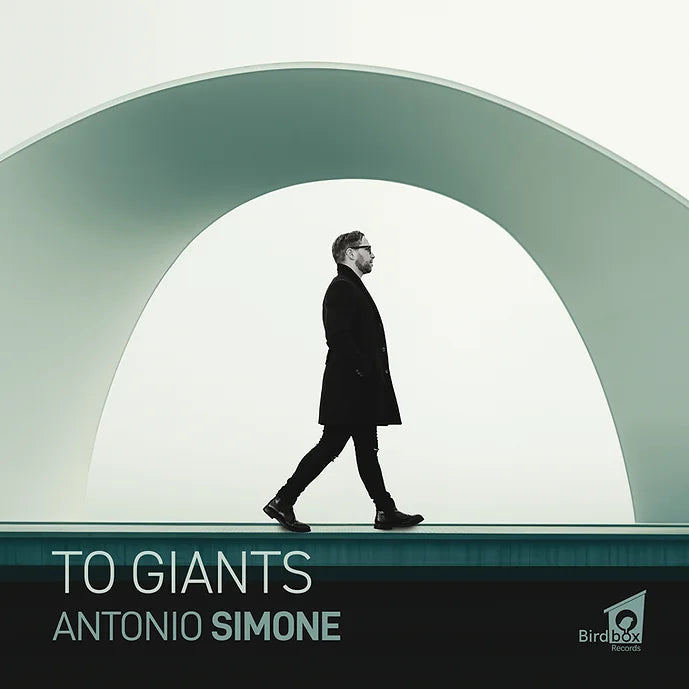
Antonio Simone | TO GIANTS
Music genre: JAZZ
Out of stock
Couldn't load pickup availability
Antonio Simone | TO GIANTS (BBR2024AS01 )
Available in: CD, HD FILE 96kHz • 32bit
Traces
1- Mercy M ercy M ercy (J. Zawinul ); 06:45
2- Naima (J. Coltrane); 07:06
3- Arabesque (A. Jamal); 2.08pm
4- Giants' Melodies (Un Poco Loco B. Powell – Evidence T. Monk); 08:2 5
5- African Flower (D. Ellington); 07:5 1
6- Giants' Conversation (A. Simone arrangements / Watch it H.Hancock); 07:02
7- Remembering Sante's W ay (fantasy for solo piano by Bartokiana and Sweeten - S.Palumbo) 0 9:09
Line up
Antonio Simone | piano, rhodes, synthesizer
Angelo Verbena | double bass
Marcello Spallucci | drums, tar
Credits
Produced by Lorenzo Vella | BIRDBOX RECORDS
Recording at Nightingale Studios, Palombara Sabina (RM)
Recording/Mixing/Mastering engineer: Lorenzo Vella
Mastering engineer: Lorenzo Vella
Visual & graphic design: Nerina Fernandez
Description
The pianist and trio leader's new album features tributes to various jazz pianist-composers, as well as pioneers of the various styles that have shaped the genre's evolution. It's a celebration of the jazz piano genre, which encompasses a vast array of styles and possibilities that only a multipurpose instrument like the piano can offer.
The project unfolds through a series of pieces that mostly address the compositional progression, aimed at revealing the artistic flair of the pianist-composers (from the 1940s to the 1960s and beyond), with the exception of one track, "Naima" by J. Coltrane, by the saxophone giant, to whom, given the composer's greatness, the pianist couldn't help but pay homage. On this album, and with reference to this last track, the pianist wanted to emphasize the indispensible nature of such an artist who marked the end of the bop period and the transition to free jazz, as well as the merit of infusing a mystical vision into his compositions. It's no coincidence that the trio's leader opens the track with a profound and contemplative interplay between double bass and Rhodes piano.
The album “To Giants” contains the solo piano piece “Remembering Sante's Way,” an improvised fantasia dedicated to an illustrious pianist on the Italian jazz scene, Sante Palumbo. The piece aims to evoke the Italian pianist's impressionistic, jazzy sound. Sante Palumbo, a great pianist and composer of the 1960s and 1970s, boasts numerous collaborations with some of the greatest names in history, including Astor Piazzolla and Ron Carter, to whom the young pianist and protagonist of this album is very close, both for educational and other reasons. Among the tracks on the same album, you can hear pieces with a more distinctive mainstream sound as well as pieces featuring revisited themes in a more original version, reinterpreted with a new jazz sound.
The tracks dedicated to B. Powell and T. Monk, such as "Giants' Melodies" (a piece based on the melodies of "Un Poco Loco – Evidence," including a brief reference to Bill Evans's "Very Early") and J. Zawinul's "Mercy Mercy Mercy," reflect this. Of particular interest is the track "Giants' Conversation," a medley of famous compositions in which the great jazz pioneers can be heard conversing with each other using their own melodies and gradually transitioning to a different sound. In it, in fact, you can hear Duke Ellington with Dancers in Love (a stride piano piece, composed in 1944 as a tribute to Fats Waller), Passion Dance by McCoy Tyner (a piece recorded in 1967 in the modal-quartal jazz genre), T. Monk with Well you Needn't (a famous piece from 1944, in the bebop style) and finally a brief reference to Rapsody in Blue by G. Gershwin, Rockin' Rhythm by D. Ellington, and quotes from Blue Seven by Sonny Rollins and So What by Mil Davis. The final touch of this “Intro” track is the song “Watch it” by H. Hancock, an artist very dear to the trio's leader.
The album contains two tracks that pay homage to two of the trio leader's favourites and inspirations for his piano playing: African Flower by D. Ellington (1962), in an original sound characterised by the use of a percussive instrument such as the tar, and Arabesque by Ahmad Jamal (a pianist very dear to him for the orchestral conception of his piano playing and use of space). A piece with the pianist's expressive and creative peculiarities.
Share

-
Shipment of physical products
Free shipping in Europe (EU), from 4 items - Request quatozione for shipping costs for countries no EU
-
Digital product delivery
The delivery of digital products will take place directly on the site and you will also receive an email with the link to download the files.
-
Write a review
Above, you can write a review about the product you purchased, we will be happy to hear your opinion.
